Essential Components for Building Reliable Industrial Electronic Systems
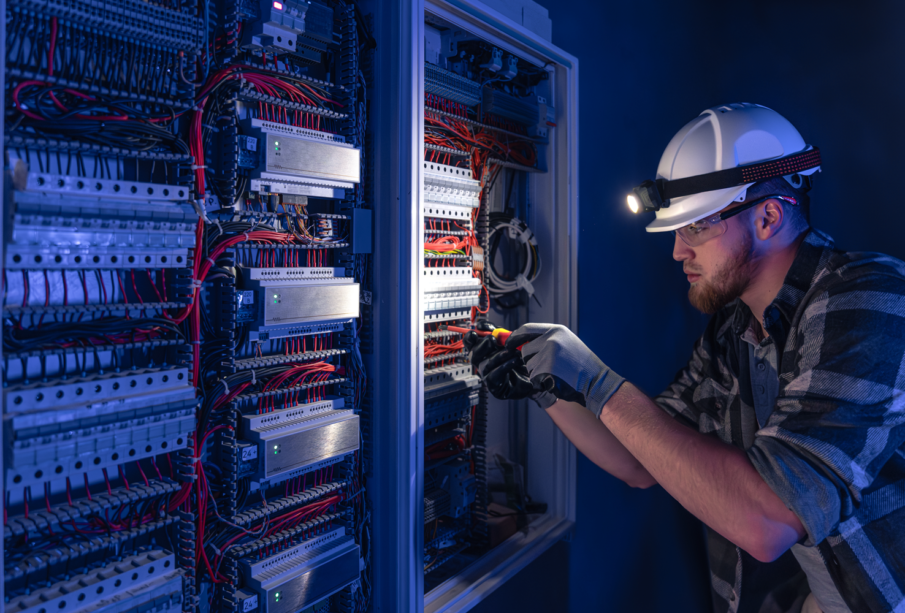
Industrial electronic systems control machinery, monitor production, collect sensor data, manage energy, and support automation across countless industries.
Reliability is especially important because a small component failure may stop an entire production process.
Building dependable industrial electronics therefore requires attention to every part of the system, from power supplies and sensors to cables and environmental protection.
Different types of hermetic connectors are available to support a wide range of industrial, aerospace, and medical applications. Understanding their design characteristics can help engineers choose appropriate solutions for specific projects.
Reliable Power Supplies
Power quality is fundamental to electronic reliability.
Industrial environments may experience voltage fluctuations, electrical noise, switching transients, or temporary interruptions.
Power supplies should be selected with appropriate voltage and current capacity while allowing reasonable operating margin.
Protection against overvoltage, short circuits, and thermal overload can prevent individual problems from damaging larger parts of the system.
Redundant power supplies may be appropriate for particularly critical equipment.
Sensors Suitable for the Environment
Sensors are often installed where conditions are more severe than those experienced by the main control electronics.
Temperature, vibration, pressure, chemicals, dust, or moisture can affect sensor performance.
Engineers should select sensors based on both measurement requirements and environmental durability.
Accuracy, response time, operating range, calibration requirements, and long-term stability are all important considerations.
Industrial Communication Networks
Modern automation systems depend on reliable communication.
Controllers, remote input/output modules, sensors, drives, and monitoring systems exchange data continuously.
Communication networks should be designed with appropriate cable types, topology, grounding, shielding, and redundancy.
The physical environment matters as well.
Cables installed close to motors or high-current conductors may experience more electromagnetic interference.
Robust Electrical Connections
Connections are among the most common interfaces in an industrial system.
They may be exposed to vibration, repeated maintenance, moisture, dust, chemicals, or temperature changes.
Connector selection should therefore consider much more than the number of contacts required.
Electrical rating, environmental protection, mechanical durability, locking method, service life, and accessibility can all influence reliability.
Effective Enclosures
Electronic enclosures provide the first line of defense against the operating environment.
A suitable enclosure can protect components from dust, water, accidental contact, and mechanical damage.
However, enclosure design must also address heat.
Sealing electronics too tightly without adequate thermal management can create high internal temperatures.
Designers may use heat sinks, conduction paths, fans, heat exchangers, or other cooling methods depending on the application.
Proper Cable Management
Cable management is often overlooked during early design but can significantly affect reliability.
Cables should be protected from sharp bends, abrasion, excessive pulling forces, and moving machinery.
Power and sensitive signal cables may need physical separation.
Clear labeling can also improve maintenance efficiency and reduce the risk of incorrect reconnection.
Strain relief should be provided where cables enter connectors or enclosures.
Grounding and Shielding
Poor grounding can create electrical noise, measurement errors, communication problems, or safety risks.
Industrial systems often combine high-power equipment with sensitive electronics, making grounding strategy especially important.
Shielding can reduce electromagnetic interference, but only when implemented correctly.
Cable shields, equipment enclosures, connector shells, and grounding points should be treated as parts of one coordinated system.
Thermal Management
Heat is a major contributor to electronic component aging.
Industrial control cabinets may contain power supplies, processors, drives, communication equipment, and other heat-generating devices.
Ambient factory temperatures may already be high.
Engineers should estimate heat generation and ensure that components remain within their rated temperature limits.
Filters and fans also require maintenance because airflow can decrease as dust accumulates.
Surge and Transient Protection
Motors, relays, solenoids, lightning, switching operations, and power distribution events can generate electrical transients.
Sensitive electronic equipment may require surge suppression or isolation.
Protective devices should be selected according to the types of electrical disturbances expected in the facility.
Proper grounding and installation are equally important.
Design for Maintenance
Industrial systems may operate for many years.
Components should therefore be arranged so technicians can inspect, test, and replace them safely.
Frequently serviced components should be accessible without dismantling unrelated equipment.
Clear documentation, labeling, and wiring diagrams reduce troubleshooting time.
Modular design can also allow individual sections to be replaced without shutting down the entire system.
Test Before Deployment
Factory testing can identify wiring errors, communication problems, software issues, and component failures before equipment reaches the customer.
Environmental testing may also be appropriate for demanding applications.
Testing the complete system under realistic electrical and mechanical loads provides more confidence than evaluating components separately.
Reliability Comes From the Whole System
No single component can make an industrial electronic system reliable.
Dependability comes from appropriate power design, sensors, connectors, enclosures, communication networks, thermal management, grounding, cable routing, manufacturing quality, and maintenance planning.
Engineers who treat reliability as a system-level requirement can reduce downtime, improve equipment life, and make industrial automation easier to maintain.